





Choosing Gold: 9Kt, 14Kt, or 18Kt – Which Suits You Best?
NOV 11, 2025 ,Kisna Diamond & Gold Jewellery
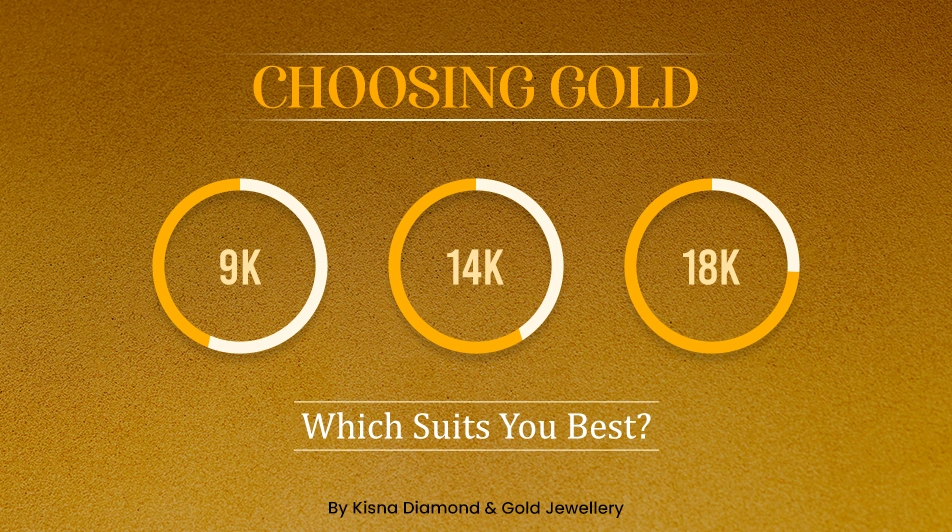
When it comes to fine jewellery, one of the most important decisions you’ll make before adding a piece to your cart is the gold purity. Whether you're browsing to buy diamond jewellery online, or browsing for a diamond ring, diamond earrings online, or a diamond pendant online, understanding the differences between 9Kt, 14Kt, and 18Kt gold can play a pivotal role in ensuring your purchase is the perfect balance between beauty, durability, and value.
In this guide, we’ll explore:
- What “karat (kt)” means in the context of gold
- The features, advantages, and trade‑offs of 18Kt, 14Kt, and 9Kt gold
- A side‑by‑side comparison to help you choose
- Practical tips for buying jewellery online
- FAQs to clear common doubts
By the end, you’ll be armed with the knowledge to choose gold that aligns with your lifestyle, budget, and aesthetic preferences — whether you’re shopping on Kisna’s online jewellery store or any trusted eCommerce platform.
What Does Karat (kt) Mean in Gold?
“Karat” (abbreviated “kt”) is a unit that indicates the proportion of pure gold in an alloy. Pure gold is 24Kt (100% gold), but because pure gold is soft and easy to deform, it’s usually mixed with other metals (such as copper, silver, nickel, or zinc) to increase its strength, durability, and sometimes adjust color.
- 18Kt gold = 75% pure gold + 25% alloy metals
- 14Kt gold = 58.3% pure gold + 41.7% alloy metals
- 9Kt gold = 37.5% pure gold + 62.5% alloy metals
These alloying metals influence not only strength, but also hue, cost, and potential for skin reactions.
Exploring Each Gold Purity
18Kt Gold – The Luxury Gold Standard
What is 18Kt Gold?
With 75% gold content, 18Kt is considered a premium option. The higher gold content gives 18Kt jewellery a rich, warm yellow glow that many associate with luxury.
Pros of 18Kt Gold:
- Intense, rich color: It offers a deeper, more vibrant gold hue, which lends itself beautifully to statement pieces and heirloom jewellery.
- Higher purity = fewer alloys: This means less likelihood of adverse reactions for those with sensitive skin.
- Prestige & resale value: 18Kt pieces often carry a higher perceived value and are appealing as investment or heirloom pieces.
Weddings, engagement rings, anniversary gifts, or any piece you wear with care. For example, when browsing 18Kt jewellery at Kisna, you’ll find designs that emphasize elegance and long-term value. (See 18Kt collection.)
14Kt Gold – The Balanced Choice
What is 14Kt Gold?
14Kt gold contains 58.3% gold. It strikes a popular balance among durability, beauty, and affordability — which is why it’s often a go-to in many jewellery markets.
Pros of 14Kt Gold:
- Strong durability: Better suited for everyday wear than 18Kt, especially in rings, bracelets, and studs.
- Good color with value: You get a warm gold tone, though not as rich as 18Kt, at a more accessible price.
- Versatility: Available in yellow, white, and rose gold varieties. Many lovers of mixed-metal styles gravitate to 14Kt for that flexibility.
- Popular name recognition: Because it's widely used, many customers feel confident in its performance and familiarity.
Everyday fine jewellery — engagement rings, wedding bands, daily pendants, hoop earrings, and versatile pieces. Explore Kisna’s 14Kt collection to see designs that balance elegance and practicality.
9Kt Gold – The Durable & Budget‑Friendly Option
What is 9Kt Gold?
With just 37.5% pure gold, 9Kt uses a heavier mix of alloy metals. It’s the most affordable and toughest of the three options here.
Pros of 9Kt Gold:
- Excellent for hard wear: Ideal for pieces that might face frequent bumps or exposure — such as chains, daily fashion rings, or children’s jewellery.
- Lower cost: It makes fine jewellery more accessible.
- Good resistance to deformation: Its higher alloy content typically makes it stronger and less bendable.
Fashion-forward daily wear, stacking rings, casual pendants, or pieces where cost is a dominant concern. While Kisna does not specialize in 9Kt as a highlight, some budget-friendly designs in their diamond jewellery collection may use lower-karat gold bases.
Side-by-Side Comparison
| Feature / Aspect | 18Kt Gold | 14Kt Gold | 9Kt Gold |
|---|---|---|---|
| Gold Content | 75% | 58.3% | 37.5% |
| Color & Luster | Deep, rich gold tone | Warm, balanced shade | Pale gold tone |
| Durability | Moderate | Strong / wear‑resistant | Very strong |
| Skin Sensitivity | Low (fewer alloys) | Mild risk | Higher risk (more alloys) |
| Price Level | $$$ (highest) | $$ (mid) | $ (most affordable) |
| Best For | Statement / heirloom pieces | Everyday fine jewellery | Budget-friendly, daily fashion |
Making the Right Choice for You
1. Match Gold to Wear Frequency & Purpose
If you plan to wear a piece daily (e.g. a ring or bracelet), durability is key — 14Kt often hits the sweet spot. For special occasions or heirloom pieces, 18Kt delivers premium shine and status. And for more affordable, strong, everyday fashion, 9Kt is viable if you accept some compromises.
2. Consider Skin Sensitivity
If you have sensitive skin or allergies, opt for higher-karat options that contain fewer reactive metals. 18Kt is typically safest; 14Kt is still generally safe for most; 9Kt may be depending on the alloy mix.
3. Weigh Long-Term Value vs Budget
If resale value, precious-metal content, or premium aesthetics matter, higher-karat gold wins. If your priority is style, affordability, and immediate enjoyment, lower-karat options may make more sense.
4. Inspect Before You Buy Online
When you buy diamond jewellery online, especially from stores like Kisna’s online jewellery store, make sure you check:
- BIS Hallmark or assay certification
- Clear metal karat marking (9Kt, 14Kt, 18Kt)
- High-resolution images & magnified views
- Return & exchange policy
These checks protect you from misrepresented purity or subpar alloy mixtures.
FAQs — Gold Purity & Online Jewellery Buying
1. Is 18Kt gold “better” than 14Kt?
18Kt has more gold content and richer color, making it “better” from a luxury standpoint. But 14Kt often outperforms in durability, daily wear, and cost-efficiency.
2. Does 9Kt gold fade or tarnish?
While gold itself doesn’t oxidize, alloys can develop surface wear or dullness over time. Polishing and proper care help maintain shine. 9Kt may show wear faster due to its higher alloy content.
3. Is 14Kt gold “real” gold?
Absolutely. 14Kt gold is a legitimate, widely accepted standard (58.3% gold). It balances beauty and strength for everyday use.
4. Can I wear 18Kt gold every day?
Yes — but with some care. Avoid rough impacts or abrasive environments. You might see occasional scratches, so periodic polishing is wise.
5. How to verify gold purity when shopping online?
Look for hallmark stamps or third-party assay certificates, verify detailed product descriptions, zoom into images, check return policies and reviews. Reputable sellers like Kisna will display karat and certification transparently.
6. Which pieces are better in which karat?
- Rings & bracelets: lean toward 14Kt (durability)
- Necklaces & pendants: 18Kt or 14Kt both work, considering wear intensity
- Studs / earrings: 18Kt is better for sensitive skin, though 14Kt is often sufficient
- Fashion / trend pieces: 9Kt can be acceptable if durability and cost are the focus
Final Thoughts
Choosing between 9Kt, 14Kt, and 18Kt gold isn’t a one-size-fits-all decision. The “best” option depends on your lifestyle, how often you'll wear the piece, your budget, and whether you prioritize long-term value or immediate affordability.If luxury, depth of color, and resale potential are your priorities, 18Kt gold is the way to go. If you wear your jewellery daily and want a balance of aesthetic and strength, 14Kt is a smart middle ground. If cost is a primary driver and durability is crucial, 9Kt can still serve you well — though with some trade-offs.
When you buy diamond jewellery online, always make sure you’re purchasing from trusted sellers like Kisna. Browse their 18Kt collection, 14Kt collection, or their broader diamond jewellery catalog. Explore rings, earrings, and pendants to see how different karats affect look and price.
Recent post
MAR 02, 2026
Chic & Colourful Jewellery Picks for Holi 2026
FEB 23, 2026
Women’s Day 2026: Jewellery Inspired by Her Strength
FEB 18, 2026
How to Choose the Best Bracelets for Girls: Style, Age & Safety Guide?
FEB 17, 2026
Best Kids Diamond Ring Designs You Can Buy Online
FEB 17, 2026
How to Choose the Perfect Earrings for Your Gown?